When I was young, I used to walk past a house in Truro with a small sign in the window:
Invisible Mending Here.
I don’t remember much about the house. But I remember those words.
At the time, they made perfect sense to me. Something broke, someone repaired it, and the skill of the repair was measured by how little damage you could still see.
I carried that idea with me for a long time without realising it.
When I had therapy myself, I felt I shouldn’t show the mends. If therapy was helping, surely the aim was to become whole again and get back to the person I had been before the cracks appeared. So I worked hard at making the mends invisible.
Many of us do. We learn to manage, we get good at getting on with things, and we let people see the finished surface rather than what lies underneath. Because those ways of coping work so well, it can be hard to notice when they’ve started to hold us back.
Training as a therapist showed me the futility of trying to make every mend invisible. People aren’t objects you can restore to their original condition. Life leaves marks. Some experiences change how we see ourselves, and some leave wounds that stay tender.
The task isn’t to make all of that disappear. It’s to live with what happened without hiding every trace of it. That changed something for me. Embracing our wounds isn’t an admission of failure. It can be part of becoming more fully ourselves.
This is one reason kintsugi has intrigued me for years. Kintsugi is the Japanese art of repairing broken pottery so the break stays visible. The repaired lines show, and the history of the object becomes part of how it looks.
I don’t find that compelling because brokenness is beautiful or because pain should be romanticised. It shouldn’t. Some experiences hurt us and change us in ways we would never have chosen. But carrying the evidence of what happened is different from being defined by it.
In therapy, I’m more and more interested in what happens when we stop trying so hard to present an untouched version of ourselves. That doesn’t mean showing every wound to the world. Some things belong to us, and we can choose carefully who we share them with. It means something quieter. It means saying: this happened, it affected me, I adapted, I have scars, and I’m still here.
There’s real freedom in no longer spending so much energy hiding the mends.
I sometimes wonder what the person who put that sign in the window would make of my younger self walking past and taking in those two words.
Invisible Mending.
Maybe the sign offered exactly what it promised.
These days, though, I’d choose something different.
The mends don’t need to be hidden.
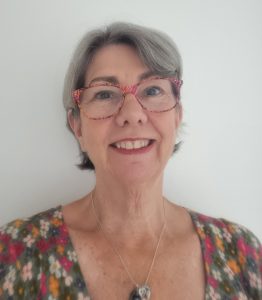
If you’d like to work with me, I offer a free 15 minute initial consultation … email me alison@agoodplace.co or message 07415 403452 to book.
I’d love to hear from you.
Alison
Alison Moore MBACP (Accred), FRSPH is an accredited psychotherapist and counsellor and the founder of A Good Place. She has over two decades’ experience supporting people through change, difficult decisions, shame, uncertainty and the times when life feels harder than it should.
Alison works with thoughtful, capable people who may have spent years managing things on their own but find themselves stuck, overwhelmed or going around in circles. Her approach is collaborative, practical and focused on helping people understand what is happening and find a way forward that feels sustainable.
Why Insight isn’t the Answer
Some people can explain themselves brilliantly. They know where their...
Read MoreA new chapter for A Good Place
There are times when life changes shape before we quite...
Read MoreWhat can you tell about a therapist without a testimonial?
At a Wellington Women In Business networking event recently, someone...
Read More
© 2026 All Rights Reserved